Jump To Section
Two Types of Geothermal
Geothermal can refer to two related but different concepts: geothermal electricity generation and geothermal heating and cooling. Both use heat energy from the earth but employ different technologies and have different end uses.
Geothermal Electricity Generation
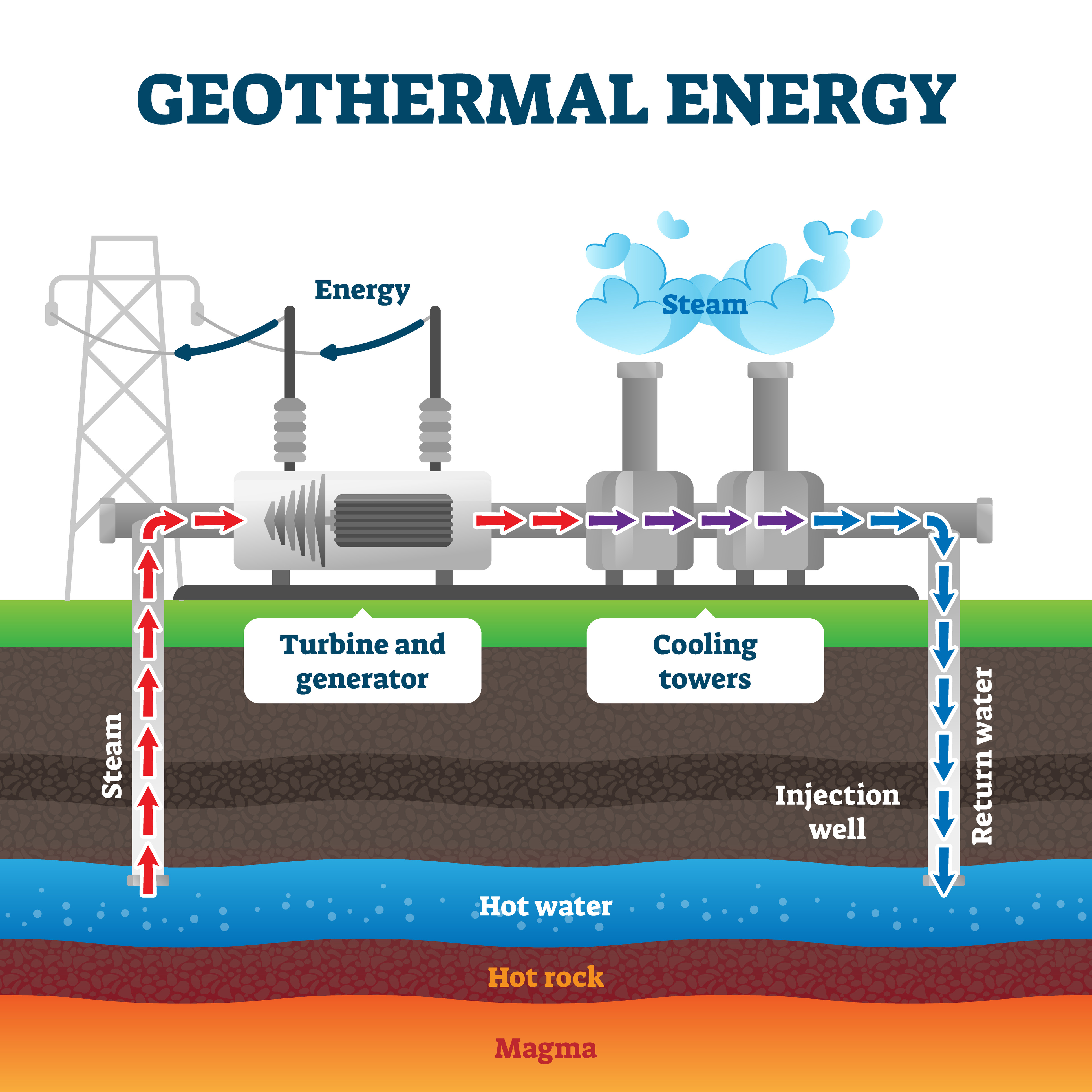
Geothermal power plants that generate electricity tap into naturally existing hot water or steam reservoirs trapped in rock formations. These power plants are usually found in tectonically active areas such as the Western United States, where geology is particularly well suited for geothermal power generation. Geothermal power plants use the naturally occurring steam, heat, or hot water from geothermal reservoirs to help spin turbine generators that produce electricity. For more information on geothermal electricity generation, visit the U.S. Department of Energy’s (U.S. DOE) geothermal webpage
Geothermal Electricity Generation | Department of Energy.
Wisconsin does not have any geothermal electricity generating power plants, as the state’s geology is not well suited for geothermal electricity generation. Geothermal power plants require heat, fluid, and rock permeability and are best suited for areas with tectonic activity and high heat closer to the earth’s surface like California and the Western United States. In contrast, parts of Wisconsin have hard granite bedrock that is difficult to drill through. The U.S. DOE and national laboratories have been working on Enhanced Geothermal technology that will allow geothermal energy to be produced in more locations across the nation. Improvements in drilling technology and methodology allow for deeper wells to reach hotter temperatures, along with new geothermal generating methods, like closed loop systems, are expanding the reach of geothermal electricity generation. To learn more about Enhanced Geothermal, visit U.S. DOE’s Enhanced Geothermal Systems webpage:
Enhanced Geothermal Systems | Department of Energy, watch this U.S. DOE video
Energy Anywhere: The Power of Enhanced Geothermal Systems or read the National Laboratory of the Rockies report on Enhanced Geothermal
Enhanced Geothermal Shot Analysis for the Geothermal Technologies Office.
Geothermal Energy Generation and Deep Enhanced Geothermal Resources
-
U.S. Department of Energy:
- National Laboratory of the Rockies:
- National Association of State Energy Offices (NASEO):
- U.S. Energy Information Agency:
Geothermal Heating and Cooling

While the present feasibility of geothermal electricity generation is influenced by geology, the use of geothermal heat pumps for heating and cooling buildings can occur almost anywhere. A ground source heat pump uses the relatively stable temperature of the ground (approximately 52 to 58 degrees Fahrenheit 6 to 8 feet below the surface) for heat transfer, warming or cooling the building depending on the season. To heat or cool a building, the ground source heat pump will circulate water or another type of liquid (typically a non-toxic anti-freeze) through pipes buried in a continuous loop underground near the building. The Polk-Burnett Electric Cooperative in Wisconsin created this video explaining how a ground source heat pump works:
How Cool Would It be to Have a Geothermal Heat Pump in Your Home.
Resources for Geothermal Network Systems
Challenges and Benefits of Ground Source Heat Pumps
Challenges
Up-front Cost: While geothermal systems can achieve cost-effectiveness over a long period of time, the initial investment can be expensive; as of 2026 estimated costs commonly range between $25,000 to $30,000. Systems with ground heat-exchanger loops have a larger upfront cost than other types of HVAC systems, due in part to the high costs of drilling vertical loops.
Currently, there are not tax credits of incentives for homeowners to install geothermal ground source heat pump systems. However,
commercial building owners may be eligible for tax credits under the Investment Tax Credit (ITC, Section 48). Businesses may be eligible for “bonus credits” of up to 30 percent total if their projects meet specific prevailing wage, domestic content, or energy community requirements. View the Internal Revenue Service's
Advanced Energy Project Credit page for more information.
Site Requirements: Wisconsin requires all drillholes extending more than 25 feet below the ground surface to comply with administrative rules (
NR 812, Wis. Adm. Code Well Construction and Pump Installation). Not every site that desires geothermal may be able to implement it because of site-specific limitations. Working with experts in the geothermal field to determine the suitability of your location is important to planning and completing a successful project.
Sites that are better suited for geothermal have favorable geology that can lower drilling costs. Areas with lots of space (rural or suburban) and shallower easy-to-drill geology (less hard rock or difficult subsurface conditions) are good geological characteristics for geothermal. Additionally, areas where households that have limited or no access to natural gas with higher heating fuel prices might consider ground source heat pumps, as the economics of installation can be more favorable than in other areas. Sites that have ready access to low-cost natural gas, limited land for drilling or loop fields (mainly urban land plots), and have harder and complex geological characteristics can make ground source heat pumps more costly and challenging to install.
Incorrect Sizing: Incorrect system sizing can reduce the energy efficiency of the system and potentially increase maintenance costs. It is very important to make sure the size and capacity of your system match the area of the space it is intended to heat and cool. While a properly sized system can be an effective source of year-round heating and cooling, If a system is sized too small in Wisconsin’s cold climate, it could leave a customer in a colder than desired building.
Benefits
Comfort: Ground source heat pumps provide a consistent flow of air, reducing temperature fluctuations found in some other HVAC systems.
Efficiency: A geothermal heat pump system uses very little electricity. The system only uses electricity to power a fan that moves the heat, rather than a traditional heating, ventilation, and cooling system that warms or cools the air. Additionally, the building gets both heating and cooling in one system.
Long-term Costs and Lower Electric Bills: With little electricity used to heat and cool a building, electric bills in both winter and summer can be lower than with other heating and cooling systems. Additionally, geothermal systems have a longer life span than other types of heating and cooling systems. The underground loop system can last up to 50 or more years, and the lack of outdoor equipment means less exposure of its main components to weather.
Cleaner and Environmentally Friendlier: Ground source heat pump systems do not have the danger of gas leaks or carbon monoxide poisoning. Because they do not use fossil fuels, geothermal heat pumps are non-emitting options for customers to heat and cool buildings.
Cold Weather Climate: Ground source heat pumps perform well during Wisconsin’s cold winters. Because they can rely on stable underground temperatures, ground source heat pumps can be effective in maintaining their high efficiency and consistent heat outputs even during extended sub-zero periods.
Resources on Geothermal Heating and Cooling and Geothermal Heat Pumps
Geothermal in Wisconsin
One of the world’s largest geothermal heating and cooling systems is in Verona, Wisconsin, at the Epic Systems Corporation’s (Epic’s) campus. Below the campus there are approximately 6,100 boreholes across 4 borefields, with 2 lake exchange systems. Epic’s data centers need to be cooled constantly and by using geothermal, the company can do that more effectively and efficiently. According to the
U.S. Department of Energy, “Excess heat from the data center is transferred into the relatively cooler ground beneath the building, maintaining optimal temperature in the data center with much less electricity than traditional air conditioning.”
In Green Bay, Nature’s Way is installing a geothermal heating and cooling system at their facility. In summer 2025, crews began drilling 280 500-foot-deep wells for the system. The company expect the system to come online in fall 2026, cutting the site’s emissions by about 20 percent.
The OEI has funded 8 geothermal implementation or planning projects. See the table below for more information about them.
Additional Geothermal System Examples
To learn more about these and other geothermal systems in Wisconsin and the country, follow the links
Wisconsin
Connecticut
Rebates
If you are interested in a geothermal system and want to see if your utility has a rebate for a geothermal heat pump, take a look at the rebate and incentive tables on the OEI’s Heat Pump page to see if your utility provider is listed:
PSC Heat Pumps. Focus on Energy also provides rebates on Geothermal Heat Pump Systems, follow the link to see this year’s rebate:
Geothermal Heat Pumps | Focus on Energy. Since the start of 2019, Focus on Energy has provided incentives for 637 geothermal or ground source heat pump systems, with 97 percent of installations occurring at residential properties. While business geothermal heat pump installations make up only 3 percent of Focus incentive installations, they account for 68 percent of the life cycle MMBtu savings, due to the size of the systems and the energy saved because of them.
Further Reading on Ground Source Heat Pumps
For more on open and closed loops
- The Wisconsin Geothermal Association:
- U.S. DOE