Jump To Section
An energy audit,
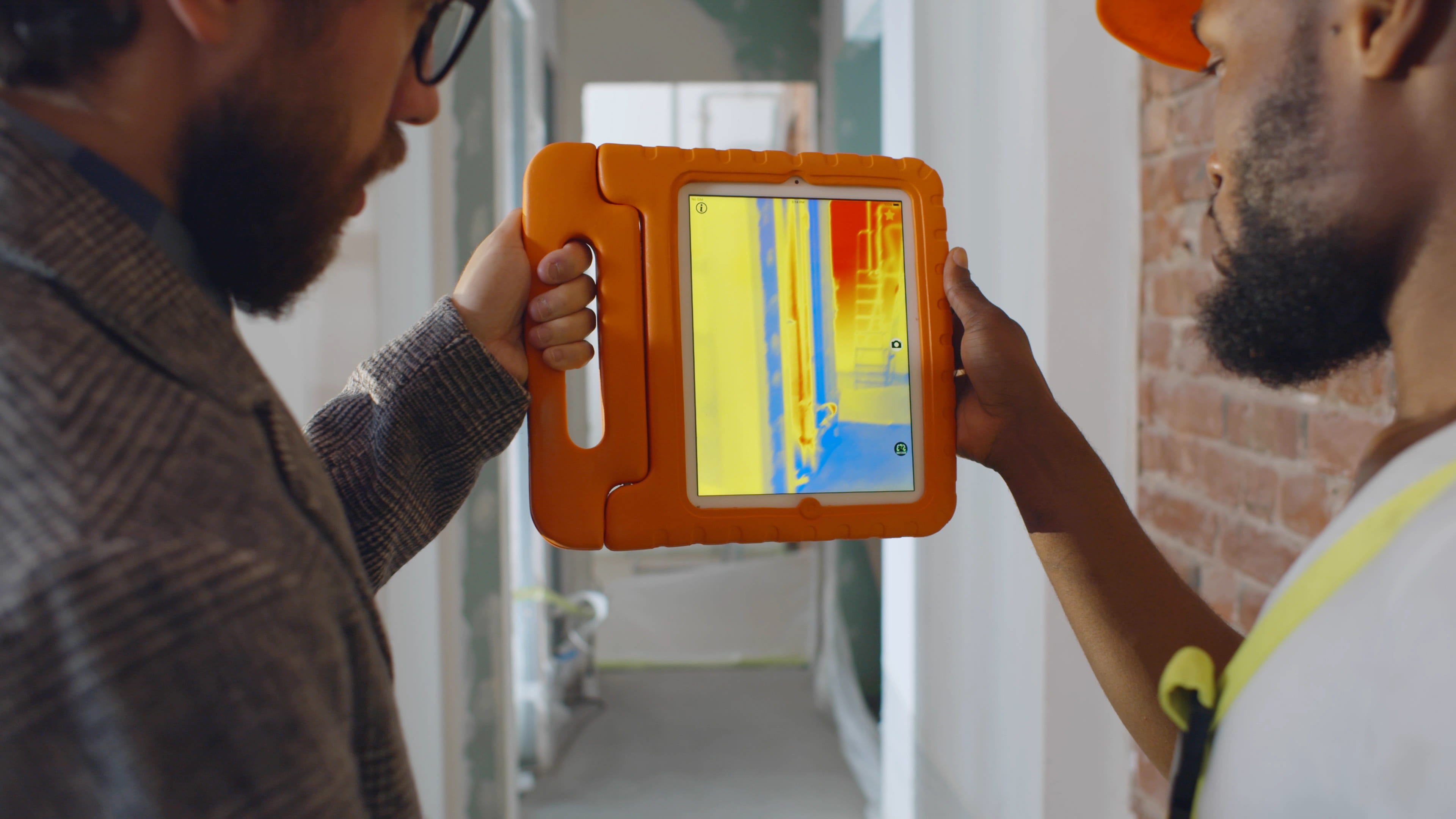 which may also be called an energy assessment, is a great place to start for any homeowner, business, non-profit, or other type of entity that is interested in reducing their energy use. Energy audits are recommended before planning, installing, and implementing upgrades to make sure the upgrades pursued are cost-effective and right for the building. For local nonprofits, municipalities, or businesses, an energy audit of facilities is an important step in creating a comprehensive energy plan and figuring out how to save energy and money. For homeowners, it can be the first step in creating a more energy efficient and comfortable living space, while also reducing energy costs.
Energy Audit Basics
An energy audit is a review of a building or set of buildings by an energy professional. Audits evaluate the performance of the building’s energy system by collecting baseline energy performance data and comparing it against its designed performance and/or against the best available energy-efficient technologies.
Audits look at energy use and potential improvements in building operations, ways to reduce energy consumption, and prioritize energy reducing opportunities based on cost effectiveness.
Common building upgrades improve efficiency and reduce energy consumption and costs that may be recommended through an energy audit may include, but are not limited to:
- Lighting
- Heating, Cooling, and Ventilation systems (HVAC)
- Hot Water Systems
- Building Envelope and Insulation
- Occupancy Control
- Load Management
Key Consideration
Simply doing an energy audit does not save money. A building will need to be retrofitted and upgraded with some of the recommended actions to save money. Based on the available budget for conducting an energy audit and for implementing recommended projects, it is a good idea to select the right level of energy audit for your home or business. More in-depth audits may not be necessary if a customer is already targeting specific needs or is limited in its budget for following through on audit recommendations.
Even if you have conducted an energy audit before, you may want to consider conducting an updated audit. Because of constantly improving and changing technology, a new audit may identify new or more cost-effective recommendations. If a building has undergone energy efficiency upgrades (ex. energy efficient window replacements, upgraded building insulation, etc.) or it has been longer than 5-7 years since a previous audit was performed, then a new audit could provide additional insights and recommendations.
Reviewing Utility Data
One of the important pieces of information to inform an energy audit is energy usage data. It is important for households and businesses to understand their electric bill, but this data is also critical for auditors to understand the building’s energy needs.
There are additional resources available to help you understand your energy bill.
Energy Auditor Certifications
Energy audits and assessments are performed by an energy professional. These individuals usually have extensive training and credentials from a professional certifying organization. Energy auditing certifications demonstrate that an individual is trained in the auditing process, with different certifications indicating different skills and levels of expertise.
Energy Certification Information
For those interested in learning more about the energy certification process and what it takes to become an energy auditor, explore the different certifying organizations below.
Residential Home Energy Assessments
 This section will focus on information for residential customers who are interested in a Home Energy Assessment. For information on Commercial and Municipal Audits, follow the link:
Commercial Energy Audits.
This section will focus on information for residential customers who are interested in a Home Energy Assessment. For information on Commercial and Municipal Audits, follow the link:
Commercial Energy Audits.
Residential Customers
For home energy assessments in Wisconsin, there are a few different options, including but not limited to certified energy auditors and contractors, and Wisconsin’s Focus on Energy certified Trade Allies that offer energy assessment services.
A residential home energy assessment typically includes the following, but can include additional tests and analysis, if offered or requested:
- A whole home walkthrough, including a room-by-room examination
- An examination of past energy bills and use to establish a baseline for energy performance
- Different types of tests, including a blower door test to measure air tightness, and combustion safety and ventilation tests to ensure your furnace and water heater have sufficient air circulation
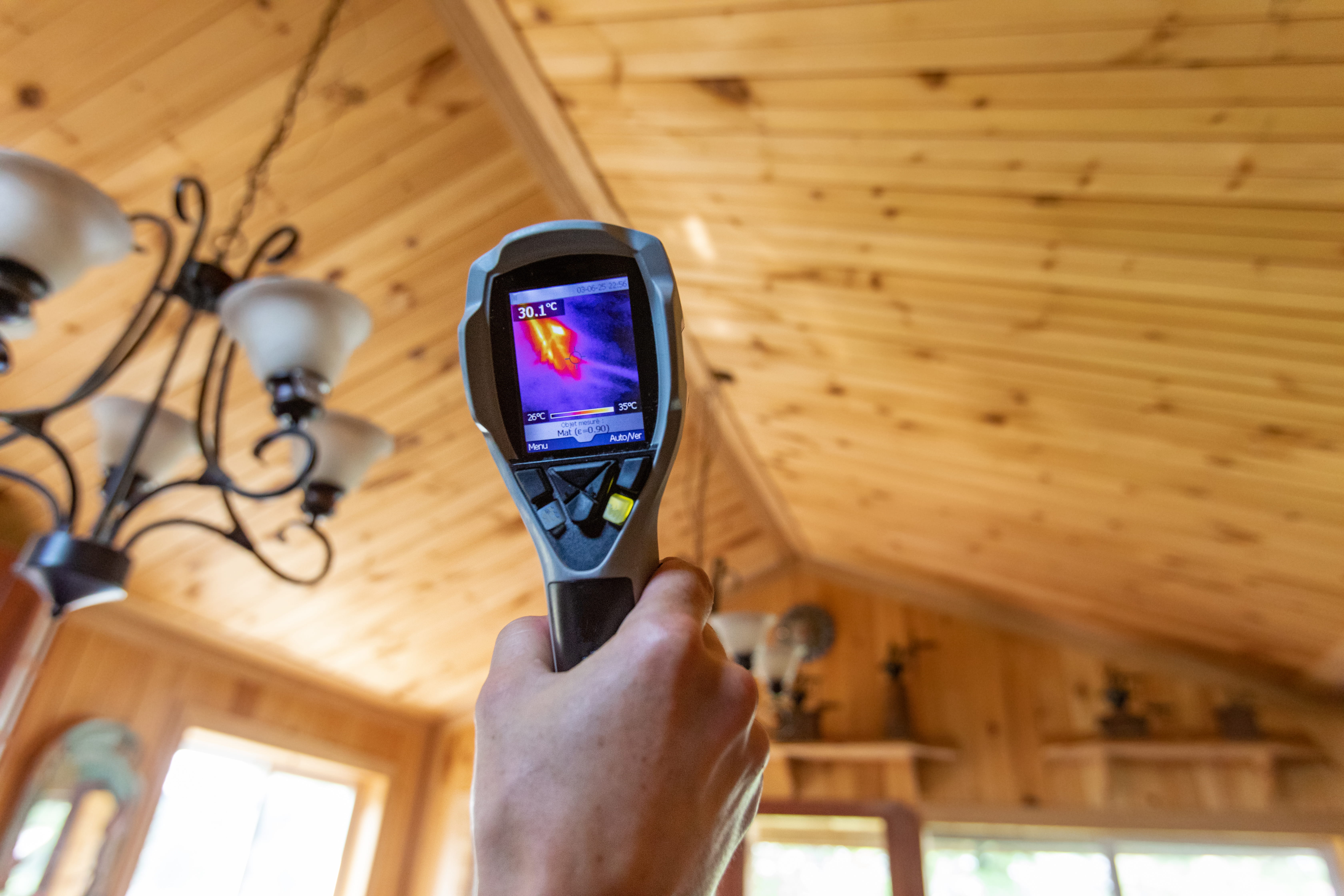
- An infrared camera scan to identify air leaks and lack of insulation in the walls
- A report overviewing the assessment findings and a list of project recommendations
Read More About Home Energy Assessments
How to Get Started with a Home Energy Assessment
Homeowners looking for ways to find energy saving opportunities should consider following the steps below.
Step 1: Decide what needs to be included in your assessment, the types of upgrades you are willing to undertake in the near future and their associated cost, and your budget. Be honest about your budget and what future projects you can afford. Also, consider if you are trying to take advantage of specific state or federal rebates, such as the IRA Home Energy Rebates (see gray box below), be aware of who (level of auditor certification) or what (types of tests) are required of an audit to be eligible for the rebates.
Some tests that you might want to consider are listed below. The Blower Door Test is typically standard for home energy assessments and sets a good baseline to work from. Other tests (like thermographic inspection) might an add-on to the assessment:
- Blower Door Tests: Auditors use this test to determine how much air is escaping your home. Benefits of establishing the building’s tightness include reducing energy consumption, avoiding moisture condensation problems, avoiding drafts, controlling outdoor contaminants, and determining the proper size and airflow requirements for heating and cooling equipment. Learn more about the test: Blower Door Test | Building America Solution Center and
Blower Door Instructional Video | Building America Solution Center.
- Thermographic Inspections: This test looks at surface temperatures using infrared video and cameras. The tools used record the temperature variations of the building, helping the auditor determine if insulation is needed. They are also used after installation, as a quality control tool to make sure it was done properly.
- Combustion Safety and Ventilation Test: If the home has a gas or oil furnace, boiler, water heater, or other fuel-burning appliances, this test checks to make sure exhaust gases are vented safely and properly outside the home. This test helps prevent carbon monoxide exposure, verifies safe venting, and protects the HVAC system. This is an important test before the addition of insulation or air-sealing. If a house is sealed tighter and there is a leak, harmful gases might not have a way to ventilate causing them to remain in the home. For a more technical description of the test:
Combustion Appliance Zone (CAZ) Testing | Building America Solution Center.
IRA Home Energy Rebates
For residents interested in the
Inflation Reduction Act HOMES program, delivered by Focus on Energy, a home energy assessment must be done before any work is started. To help the assessment process, nine months of utility data must be provided. This helps the auditor accurately assess potential energy savings and create a project plan. An energy model will be created to predict how much energy will be saved, and an energy report will be provided, detailing energy-saving home improvements. There is typically a cost for a home energy assessment. Qualified Low-income households are eligible for up to a
$500 rebate from the HOMES program to help cover that cost.
To help find an IRA Registered Energy Assessor, use the
Focus IRA | Find a Contractor webtool. Click on the filter button and select the “Home Energy Assessment (HOMES)” option to find Home Energy Assessment contractors.
Step 2: Identify potential energy auditors. In Wisconsin, homeowners can find an energy auditor through the Focus on Energy website:
Energy Assessments | Focus on Energy. There are also resources at the bottom of this webpage including certifying organizations and their directory that you can search.
Step 3: Once potential home energy assessors are identified, homeowners will want to evaluate potential energy auditors to make sure they are qualified. A few tips in helping evaluate auditors:
- Get references of past clients to see if they were satisfied with the auditors work and/or call the Better Business Bureau to see if there are any complaints against the auditor.
- Some federal rebates or tax credits require energy auditors have obtained a certain level of certification. You can follow the link to see U.S. Department of Energy’s list of approved certifications, and you can check if your energy auditor has that qualification:
Qualified Certification Programs for the Energy Efficient Home Improvement Credit.
- You can ask what equipment they use and if they give a U.S. Department of Energy
Home Energy Score as part of their evaluation.
Step 4: Once you find an auditor that can perform the home energy assessment that you need and has the credentials you are looking for, contract with the auditor to complete the work.
Resources for Home Energy Assessments
Commercial and Municipal Energy Audits
 This section will focus on information for commercial, municipal, or other organizations who are interested in an Energy Audit. For information on Residential Home Energy Assessments, follow the link:
Residential Home Energy Assessment.
This section will focus on information for commercial, municipal, or other organizations who are interested in an Energy Audit. For information on Residential Home Energy Assessments, follow the link:
Residential Home Energy Assessment.
Commercial and Municipal Customers
For commercial customers, the
American Society of Heating, Refrigeration, and Air-Conditioning Engineers (ASHRAE) established a scale for the different levels of energy audits based on the complexity of the assessment. It is typically recommended that Benchmarking and a Level 1 audit are completed first, as they help gather basic information and data necessary for the deeper analysis and modeling provided by Level 2 and 3 audits.
Benchmarking
Although not an official ASHRAE level, benchmarking takes place during the preliminary energy use analysis. In this step, auditors compare a building’s energy use against comparable buildings and calculate the total building energy use per square foot (Btu/sf).
Level 1 Audit: Walk-Through
A level 1 audit includes analysis of a building’s energy bills and a short inspection or walkthrough of the building, identifying no cost and low-cost energy saving opportunities, and provides a general idea of potential higher cost capital improvements.
Key Defenitions
- No cost project: have no significant cost, except for internal labor. These often focus on operations and maintenance changes.
- Low-cost project: usually require relatively small capital outlays.
- High-cost projects: require higher capital investment and are usually budgeted for a fiscal year in advance.
Level 2 Audit: Energy Survey & Analysis
A level 2 audit includes everything in a level 1 audit, plus a detailed building survey, energy calculations, and financial analysis of possible energy efficiency projects, including estimated implementation costs for each low-cost and no-cost recommendation, estimated financial and energy savings for each project, and a rough estimate on capital project costs and savings.
Level 3 Audit: Detailed Survey & Analysis
A level 3 audit is also sometimes referred to as an investment grade audit, as this level of audit will include more depth and analysis for high-cost capital investment projects. In addition to the analysis provided in a level 2 audit, a level 3 audit includes monitoring of building operations, data collection, and engineering analysis (possible schematics and other technical work). To reduce risks with costly capital projects, expanded analysis includes detailed modeling and measurements to increase accuracy and precision around costs, savings, and project feasibility.
For more details about each Level of Audit:
How to Get Started with a Commercial Energy Audit
Step 1: Define the scope of work and know what level of energy audit makes the most sense for your project. Is this part of a larger project or comprehensive energy plan or are you looking to retrofit a particular building? Have you conducted an audit in the past or is this the first energy saving measure the community is undertaking?
Be specific and honest with what you need and what you can afford for future projects. Ask if a level 1 audit is good enough to get started or if jumping right to a level 2 analysis makes the most sense. For example, there is no need to explore solar installation, if all the organization wants to do is create a more energy efficient building. In this case, a level 1 audit would be best. Tailor the audit to the current means and objectives.
Step 2: Identify potential energy auditors. In Wisconsin, businesses can find an energy auditor through the Focus on Energy website:
Energy Assessments | Focus on Energy. Another option is checking with the electric utility for the building to see if they offer auditing services. Or you can check out the resources at the bottom of this webpage of links to some specific certifying organizations and search their directory.
Step 3: Once a pool of energy auditors is identified begin soliciting bids and evaluating credentials. Reminder, energy auditing certifications demonstrate that an individual is trained in the auditing process, and the different certifications indicate different skills and levels of expertise.
Create a Request for Proposals (RFP) or a Request for Qualifications (RFQ) and solicit bids from energy auditors. Be specific about the type of building(s) that the auditor will need to assess, the general level of audit you would like, and if you know the certification level needed for your project.
Review the bids you receive. You will want to check the bidder’s credentials to make sure they are certified to audit commercial buildings and match with what you need, especially as certain rebates or incentives require a certain certification level. Additionally, check if they have audited similar types of buildings to yours. Some examples of commercial certification are:
- P.E. (Professional Engineer)
- BEAP (ASHRAE Building Energy Assessment Professional)
- CEM (AEE Certified Energy Manager)
- EBCP, CBCP (AEE Existing/Certified Building Commissioning Professionals)
Step 4: Once you find an auditor that can perform the audit that you need and has the credentials you are looking for, contract with the auditor to complete the work.
Incentives and Rebates:
Resources to Find an Auditor: