Jump to Section
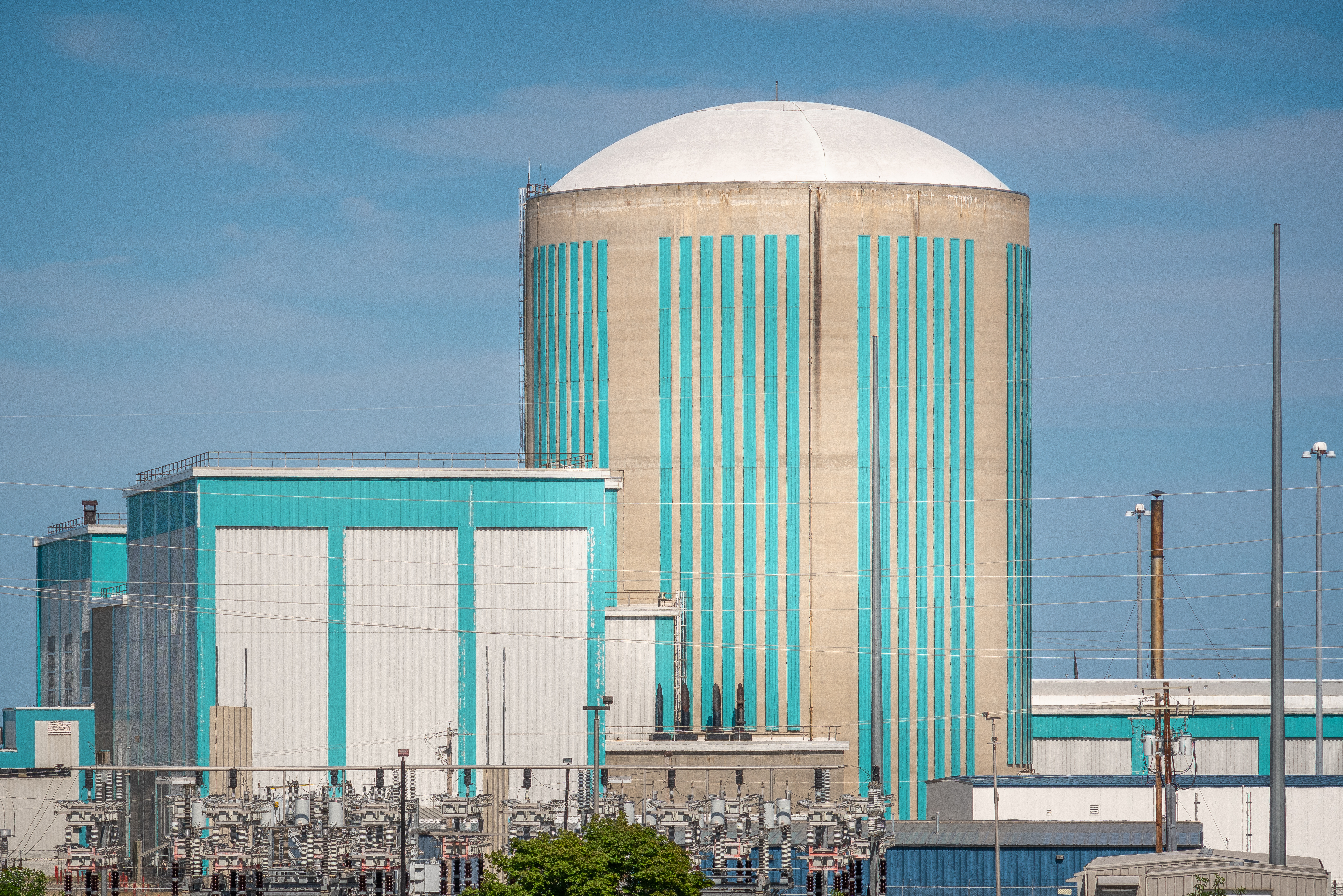
(“Kewaunee Nuclear Power Plant" by Chad Davis is licensed under CC BY 2.0)
Basics
Nuclear energy has been used for power generation in the United States since 1960. As of 2025, there are 54 nuclear power plants operating 93 commercial nuclear reactors across 28 states in the United States. Since 1990, approximately 20 percent of electricity generated in the United States has been powered by nuclear energy (
Nuclear power plants - U.S. Energy Information Administration (EIA)). Nuclear energy also has the highest capacity factor of any energy source at 92.5%, meaning it produces maximum power over 92% of the year (
Nuclear Energy Reliability | Department of Energy).
The first nuclear power plant in Wisconsin began operating in 1967. Wisconsin currently has one operational nuclear power plant (Point Beach near Two Rivers, Wisconsin).
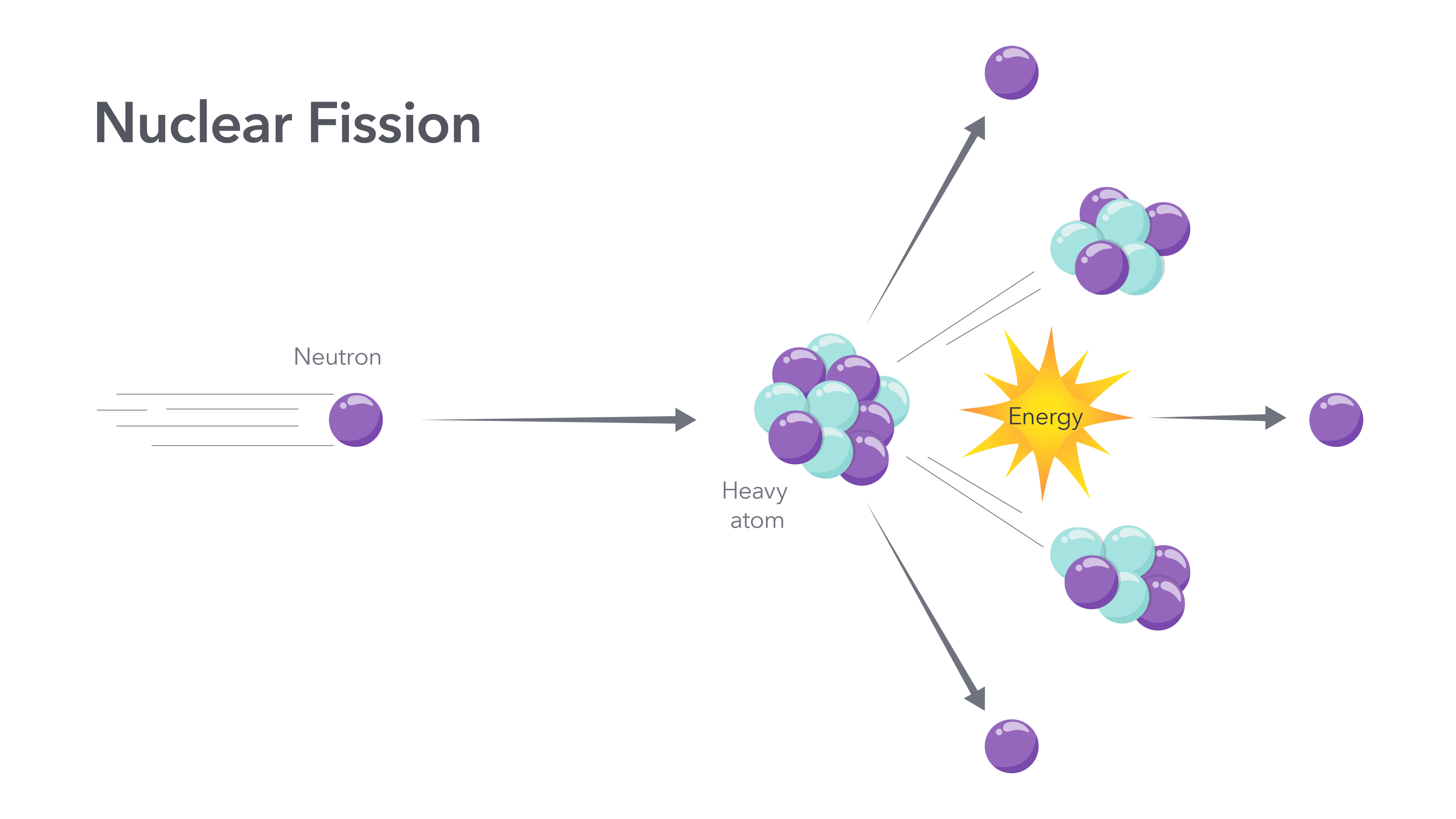
(Figure-1 Nuclear Fission Process)
Existing nuclear power plants generate energy and electricity through a process called fission. Fission is a process where a neutron collides with a uranium atom and splits it, releasing energy in the form of heat and radiation. Heat can be converted into electricity at the power plant. The heat boils water, creating steam that spins a turbine that produces electricity. The electricity is carried to customers, while the plant keeps producing energy because the neutrons keep colliding with other uranium atoms in a process called a nuclear chain reaction. The nuclear fission process creates radioactive nuclear waste that needs to be disposed of properly and stored in a safe area.
Further Reading on Nuclear Power and Nuclear Fission:
- International Atomic Energy Agency:
- U.S. Energy Information Administration:
- Nuclear Regulatory Agency:
Nuclear Energy’s Past in Wisconsin
Wisconsin has a long history with nuclear power plants and nuclear energy research. The University of Wisconsin constructed a small
nuclear reactor in the 1960s for research and training. While the reactor was not designed to generate electricity, it is still used for research purposes today.
Wisconsin’s first commercial nuclear reactor was the La Crosse Nuclear Power Plant, located seventeen miles south of the city of La Crosse. Construction on the reactor began in 1963 and plant operations started in 1967. Dairyland Power led construction of the project, which became Wisconsin’s first nuclear power plant, with an electric
generation capacity of 50 megawatts (MW). The reactor was retired in 1987.
The Kewaunee Power Station was designed by Westinghouse Electric Corporation and licensed by the United States Nuclear Regulatory Commission (NRC) in the Town of Carlton in Kewaunee County. The Wisconsin Public Service Corporation began operation of the Kewaunee Power Station on June 16, 1974, with approximately 570 MW of generation capacity. In October 2012, Dominion Energy, the Kewaunee plant’s owner at the time, announced its decision to close and decommission the plant with the plant officially ceasing operations in May 2013.
Explore Nuclear Energy’s Past in Wisconsin
- Wisconsin Energy Institute:
- Dairyland Power:
- U.S. Nuclear Regulatory Commission:
Nuclear Energy's Present in Wisconsin
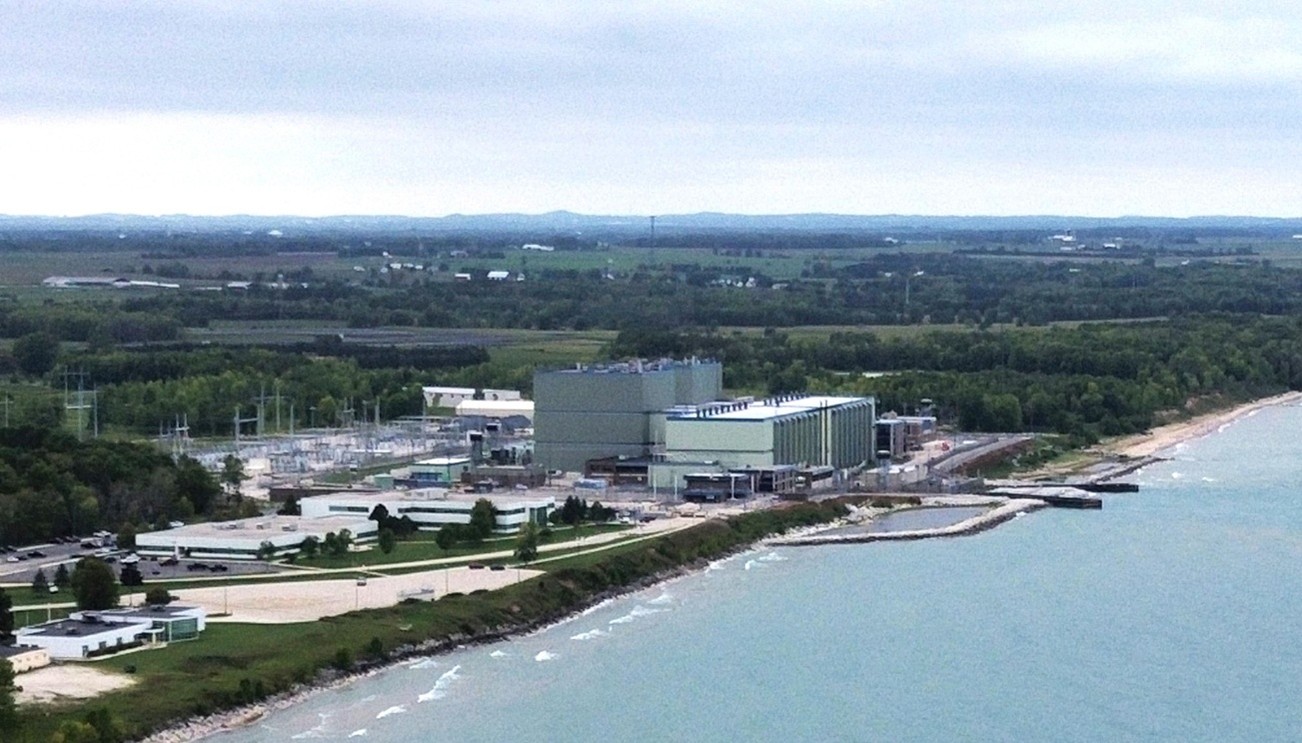
(“Point Beach Nuclear Plant.jpg” from Wikimedia Commons author Yodel2010,
Wisconsin currently has one nuclear power plant in operation, Point Beach, located near Two Rivers, Wisconsin. Point Beach’s Unit 1 started operation in December 1970, while Unit 2 came online in March 1973. Both units together have an energy generation capacity of 1182 MW. As of 2023, nuclear accounts for about 16 percent of electricity generation in Wisconsin. In September 2025, the NRC renewed the Point Beach facility’s license for an additional 20 years.
More recently, there has been a renewed interest in nuclear energy, including here in Wisconsin.
In 2022, Dairyland Power Cooperative and NuScale Power signed a memorandum of understanding (MOU) to evaluate the deployment of NuScale’s Advanced Small Modular Reactor (SMR). This agreement followed the Nuclear Regulatory Commission’s approval of NuScale’s SMR design:
 NRC Press Release
.
Additionally, EnergySolutions
announced in May 2025 that it began planning and scoping activities with WEC Energy Group to support the pursuit of an Early Site Permit from the NRC at the Kewaunee Power Station, site of the former nuclear power plant.
Wisconsin Nuclear Legislation and Siting Study
In July 2025, Gov. Evers signed 2025 Wisconsin Act 12 to establish and fund a nuclear power siting study to enhance state knowledge of nuclear energy and help meet the state’s growing need for carbon-free energy. In addition to the nuclear power siting study, Gov. Evers also signed 2025 Wisconsin Act 11 to further advance nuclear energy innovation by creating a Nuclear Power Summit Board designed to help advance nuclear power and fusion technology and development, and to showcase Wisconsin’s leadership in the nuclear industry by hosting a nuclear power summit in the city of Madison.
The nuclear power siting study will evaluate nuclear energy siting opportunities, outline applicable regulatory approvals processes, and engage public stakeholders for feedback. The PSC has opened docket (9300-EI-105) for work and information related to the study. If you are interested in keeping up to date with this work, follow the docket through the Commission’s
ERF – EZ Subscription service to receive all the updates to the docket and study.
Explore Nuclear Energy’s Present in Wisconsin
New Developments in Nuclear Energy
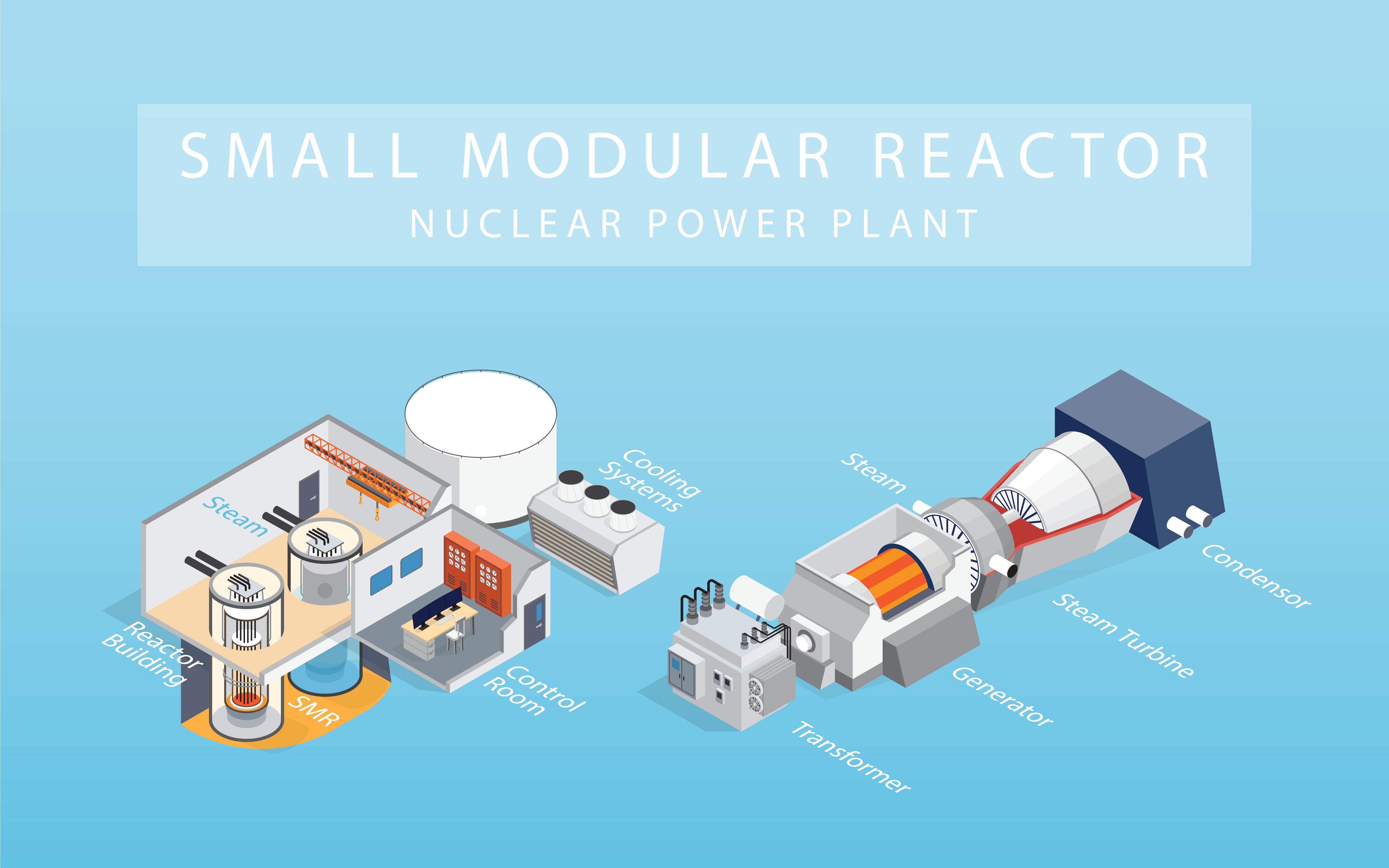
(Small Modular Reactor Nuclear Power Plant)
Small Modular Reactors (SMR)
Small Modular Reactors (SMRs) are advanced nuclear reactors with electrical output capacities of up to 300 MW, approximately one-third of a conventional gigawatt-scale nuclear reactor. The compact size and modular design make it possible that the systems and components could be factory-assembled and transported to an installation site, offering the potential for shorter construction timelines, lower upfront capital costs, and improved quality control.
According to the U.S. Department of Energy (U.S. DOE), SMR designs may employ light water coolant (similar to conventional reactors) or non-light water coolants such as a helium gas, liquid metal (e.g., sodium or lead), or molten salt.
In December 2025, SMR deployment in the United States moved forward with the U.S. DOE selecting the Tennessee Valley Authority (TVA) and Holtec Government Services for cost shared federal support. The TVA will use funds to pursue early deployment of a SMR at the Clinch River nuclear site in Oak Ridge, Tennessee, while Holtec plans two SMR-300 reactors at the Palisades Nuclear site in Michigan.
Explore SMRs:
- Department of Energy:
- Idaho National Laboratory:
- International Atomic Energy Agency:
Fusion Energy
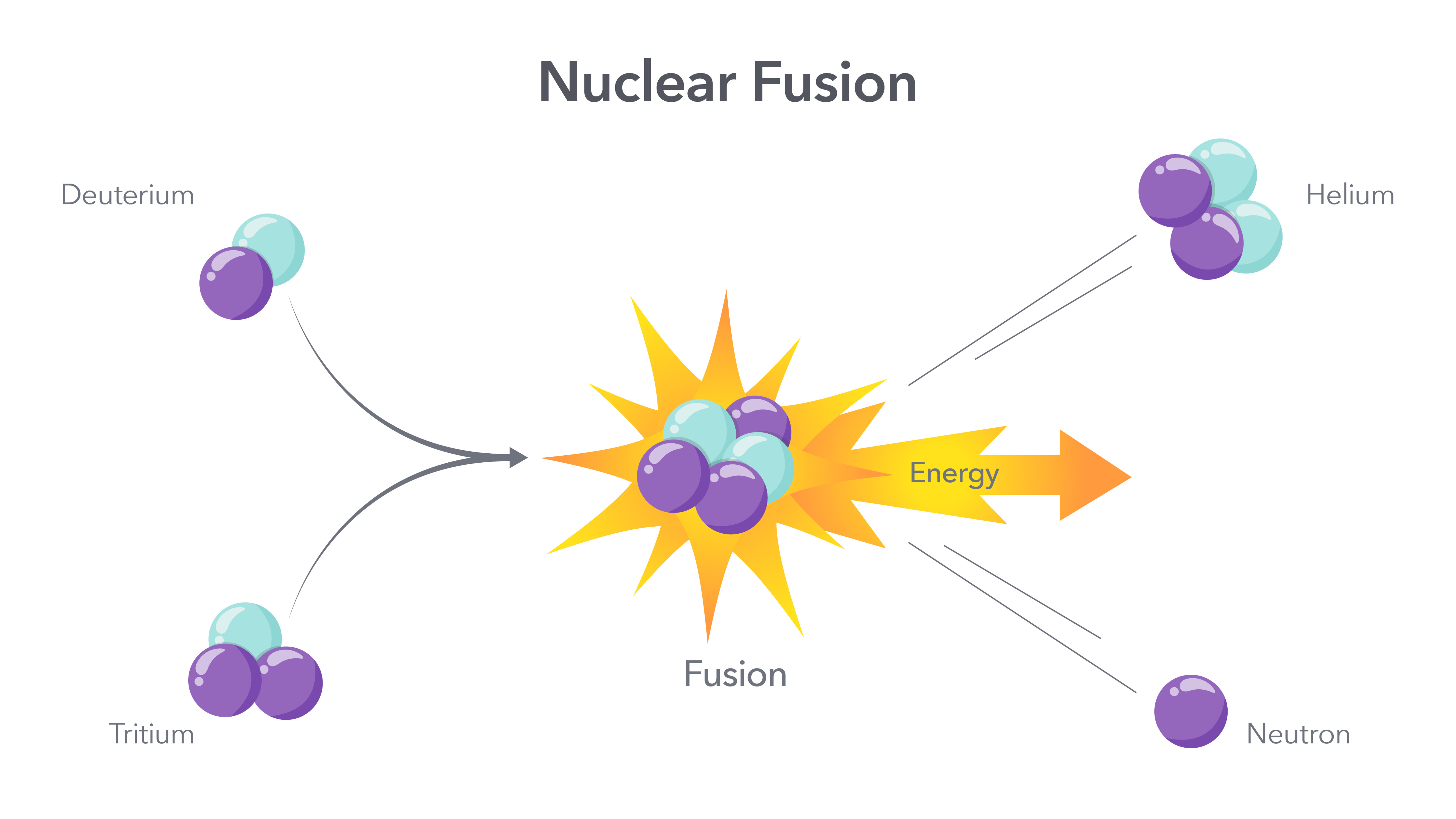
(Figure-2 Nuclear Fusion Process)
In addition to evaluating siting of traditional nuclear fission generation facilities, the nuclear power siting study, conducted by the PSC, will also consider siting of nuclear fusion technologies. Unlike nuclear fission, which produces energy by splitting atoms apart, nuclear fusion fuses atoms together to create energy. This is the same process used by our sun. According to the International Atomic Energy Agency (IAEA), “Fusion could generate four times more energy per kilogram of fuel than fission and nearly four million times more energy than burning oil or coal.”
Whereas fission reactors continue to generate a lot of heat after the reactor is shutdown, fusion reactors do not, making it easier to keep them safely cool. Fusion reactors also produce waste that is considerably less radioactive than fission reactors do, making it easier to store safely. Like fission, fusion does not emit carbon dioxide or other greenhouse gases.
Wisconsin has multiple research institutions and private sector companies exploring pathways toward viable fusion energy.
Explore Nuclear Energy’s Future
- University of Wisconsin-Madison:
- U.S. Department of Energy:
- International Atomic Energy Agency: