Smell Gas?
If you smell natural gas leave the area immediately and, from a safe distance outdoors, call the
local gas utility's emergency number or 911. Do not hesitate to report a gas leak because gas can migrate and quickly accumulate in buildings.
Do not use cell phones, lights, appliances, cars, flames, or sparks near suspected gas leaks because these can ignite it.
Detecting Natural Gas
Smell
Natural gas has an odorant added to it giving it a distinctive smell to help detect leaks. Some people describe this smell as rotten eggs, sulfur, or garlic.
Hear
A leak can make a hissing sound near a gas appliance, meter, or pipeline.
See
Natural gas leaks can caused unexplained dead vegetation along a gas pipeline and bubbles in standing water. High pressure gas leaks can blow dirt.
Properties
Natural gas is lighter than air so it will rise if it is able to. This means it can accumulate in buildings and enclosed spaces. If it leaks underground, it can travel significant distances underground before finding a way to the atmosphere, especially if it enters other pipelines or sewers or if the surface is paved or concrete.
Gas Meters
Keep the area around gas meter equipment clear of snow and ice. Carefully remove snow and ice by hand to avoid damaging the meter.
Clear all vents of snow and ice to prevent carbon monoxide from building up in your home.
Do not place plants, objects, or structures around gas meters. Utility personnel need unobstructed access to the meter.
Maintenance
Have a qualified person inspect furnaces, vents, appliance connectors and chimneys at least every other year.
Your gas utility is responsible for maintaining piping up to and including the gas meter. You are responsible for piping and appliances after the meter.
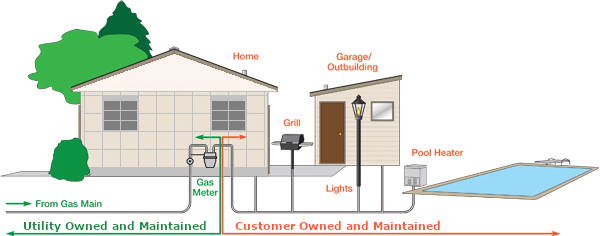 Utility owned and maintained properties include the line from the gas main and the gas meter. Customers are responsible for piping and appliances beyond that point.
Digging
Three business days before you intend on digging or disturbing soil call 811 or visit
diggershotline.com to create a ticket. This is a free service to mark underground utilities so you know where it is safe to dig.
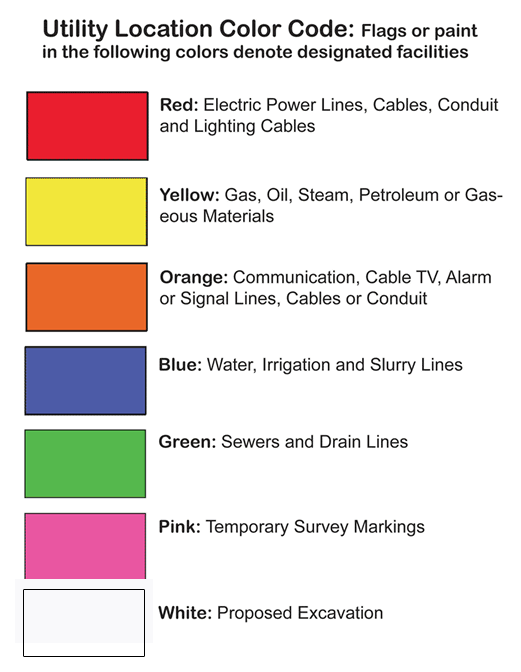 Flags or paint in the following colors denote designated facilities:
Red = Electric Power Lines, Cables, Conduit and Lighting Cables
Yellow = Gas, Oil, Steam, Petroleum or Gaseous Materials
Orange = Communication, Cable TV, Alarm or Signal Lines, Cables or Conduit
Blue = Water, Irrigation and Slurry Lines
Green = Sewers and Drain Lines
Pink = Temporary Survey Markings
White = Proposed Excavation
Identifying Pipelines
In some areas gas pipelines are identified using yellow pipeline markers. These markers include a contact number for the facility owner or maintainer.

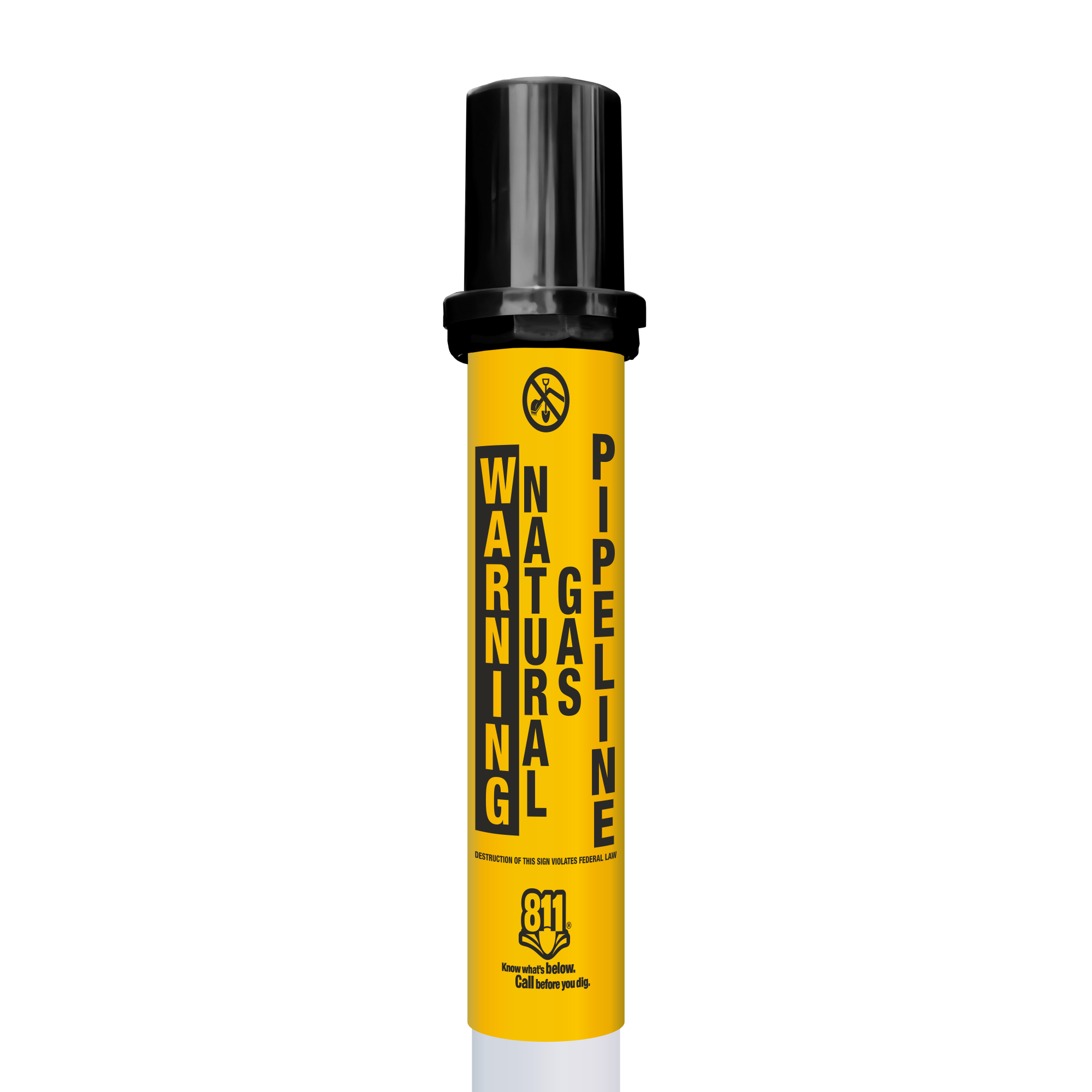
In residential areas there will often be gas main underground running along the street or sometimes in alleys even if there are no pipeline markers. There will also be a service line running from the main to each building that has gas service.
A map of gas transmission lines can accessed using the NPMS Public Viewer.
Emergencies
If there is a gas emergency, the local utility will follow their prepared emergency plan to protecting people first, then property. These plans are not publically accessible, but your local gas company shares relevant information on their website, through the mail, and with public service announcments.
Emergency responders will protect people and property by limiting the people in the area and making the situation safe. Follow any directions police or fire departments provide and give them space to do their job.
After a significant event the PSC may investigate. Events impacting interstate pipelines may be investigated by PHMSA.